Peptide Pureness Analysis Service
Determining Peptide Stacks peptide purity is generally made with logical high-performance fluid chromatography (HPLC), often paired with mass spectrometry (MS) for identification confirmation. These analytical strategies are conventional in peptide quality assurance and you will certainly generally receive HPLC and MS information with a study peptide order. The primary logical methods for peptides consist of fluid chromatography (LC), typically HPLC, combined with mass spectrometry (MS) for accurate molecular weight decision and series recognition.Understanding Peptide Pureness Testing
- This is the grade where the boost most dramatically, because attaining that last 1-- 3% of pureness needs throwing out a considerable portion of the synthesized product.All items are cost research, laboratory, or analytical objectives only, and are except human use.Either can be acceptable, yet third-party testing is the gold criterion for research-grade products.Really couple of business research peptide vendors give MS/MS information on regular COAs-- it is usually reserved for pharmaceutical-grade products and advanced research settings.
High purity is preferable since also little pollutants might disrupt experimental results or analyses. This article will break down exactly how peptide purity is determined, why it stands out from peptide identity, what the typical purity levels (95%, 98%, 99%) represent, and what "research-grade" indicates in technique for peptide reagents. Lots of peptide programs run into logical uncertainty before they fall short medically. We make use of sophisticated reverse-phase HPLC to identify the pureness of client peptide samples.
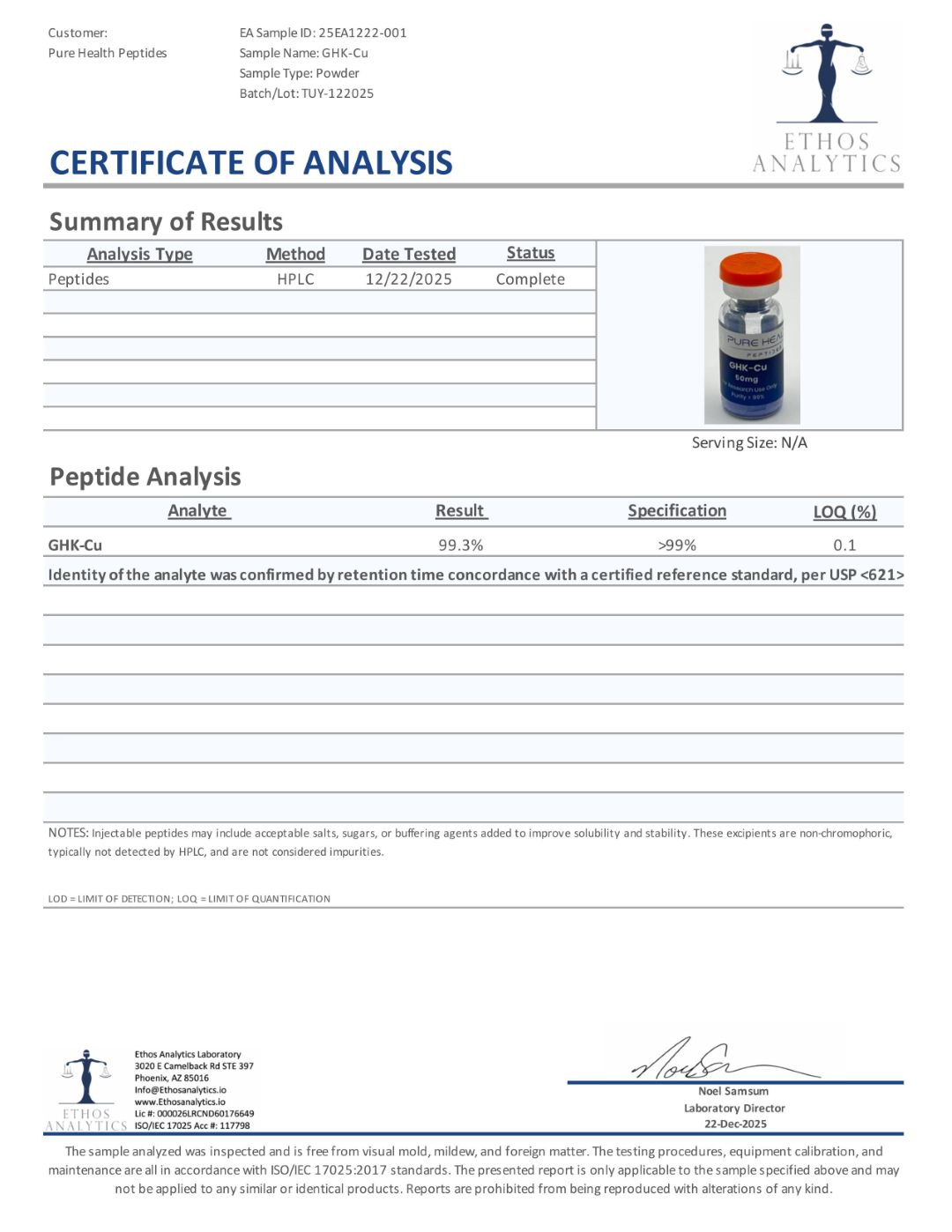
What Peptide Screening Can And Can Not Show
This front-end evaluation reduces rework and boosts the chance Pharmaceutical Grade Peptides that the very first logical pass will already be decision-useful. A modern HPLC system consists of several incorporated parts, each serving a certain feature in the separation and discovery process. Join over 5,000 active participants and get updates on new arrivals and newest laboratory reports. In The KnowGet access to our magazine, new arrivals, and latest laboratory records.Straight from the synthesizer with very little processing-- typically just cleavage from the material and precipitation. Pureness ranges commonly, from 40% to 80%+ relying on series length and trouble. Crude peptides appropriate for applications where purity isn't important, such as antibody manufacturing or preliminary screening assays where the target peptide just needs to be existing, not leading. Very closely associated with truncations, removal peptides are unabridged chains that are missing one amino acid someplace between. If topping isn't completely reliable, an uncoupled chain can remain to lengthen in subsequent steps, producing a peptide that's just one deposit except the target.